
Day 1 at Synod - What is the purpose of the Church of England?


In the week of the inauguration of the 12th General Synod of the Church of England, the Oxford Union are holding a debate with the provocative title, "This House Believes that the Church of England's Days are Numbered." If King David is to be believed, those proposing the motion cannot fail - after all he wrote, "All the days ordained for me were written in your book before one of them came to be," [1] and what is true of a King must be true of any institution. It is likely, however, that the debate will take a more prosaic turn, focusing on the institution's ability to survive in modern day Britain. So, to the state and purpose of the Church one must turn.
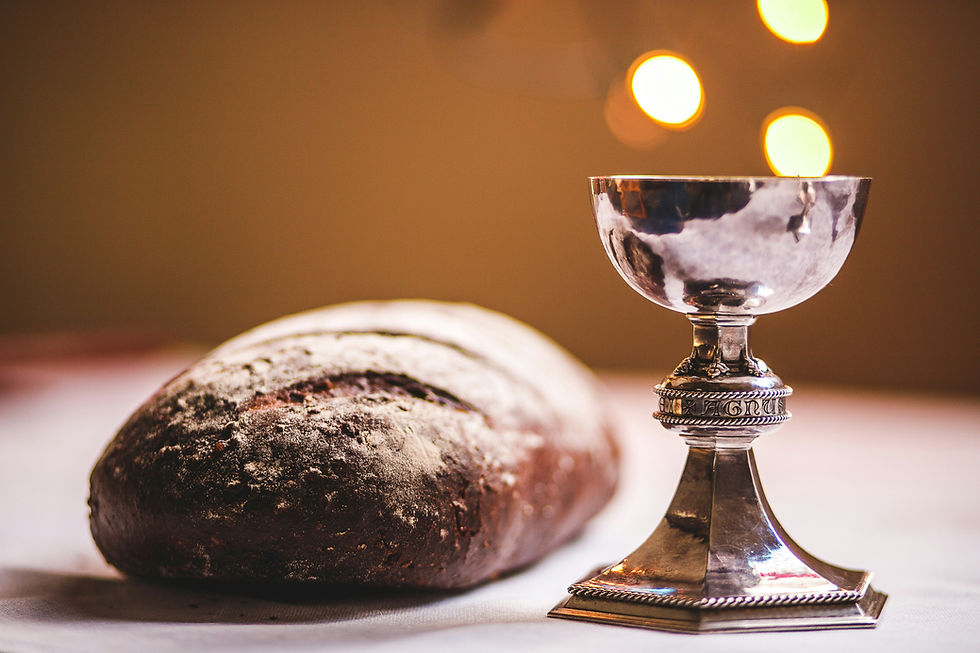
A casual observer of Tuesday's service of Holy Communion at Westminster Abbey may well have been impressed. His Majesty The King was in attendance, the Abbey was packed, the choir sang beautifully and on the surface all seemed well. Nevertheless there were aspects of the service that reveal the underlying tensions facing the Church.
The sermon was given by Sr Nathalie Becquart, XMCJ, a French Roman Catholic religious sister, who was the first woman to vote at the Synod of Bishops in Rome. The choice of a senior Roman Catholic woman to preach at the service would have been uncomfortable for many of the reformed evangelical members of the Synod. That was even before she took as her theme the 'theology of the Mediterranean', telling those gathered that, “God is dialogue, and dialogue is the place of God”. This focus on encounter and "the exchange of gifts", may be superficially attractive but creates some very strange dynamics. [2]
The Archbishop of Canterbury, the Most Revd Sarah Mullally, then presided at Holy Communion, something which, while not unexpected, would have prevented many anglo-catholic brothers and sisters from sharing in the bread and wine. Whilst her support for services of blessing for same-sex couples and her unwillingness to discipline those living in "grave and open sin without repentance," will have alienated others.
Then it was back to Church House for the 'Inauguration Ceremony', and an Opening Address by His Majesty The King, who spoke of following in his mother's footsteps,
"As her successor, I share with all my heart and all my strength a humble commitment to the life of the Church, rooted in a deep and abiding Christian faith, following the teaching of Our Lord Jesus Christ. I was baptised and confirmed into this faith which has developed and deepened across the decades of my life, to this day, providing the sustenance which nurtures and the compass which guides my every act as Sovereign."
His desire for Christian unity and for the church to remember, "those Christian communities which endure persecution, violence or displacement," seemed heartfelt, and he even spoke of bringing, "Christ’s message of salvation to the world." Something the Archbishops, who went after him, avoided, preferring instead to speak of "the love that God shares with us in his son Jesus Christ" (York) and a Church that offers, "love, belonging and hope" (Canterbury).
Both Archbishops also attempted to spin the latest Statistics for Mission to suggest that the the Church of England is growing, despite the fact that the figures show that on every measure the Church has declined over the past six years.

Once the King had left the building, and lunch had been eaten, the 'normal business' of Synod resumed.
The Archbishop of Canterbury gave her Presidential Address, which to all intents and purposes was a Synod bingo card - safeguarding, walking together, rebuild trust, welcome, diversity etc etc. Those who campaigned on a 'Save the Parish' ticket, will be encouraged that she has heard their message - "Our clergy, churches and parishes are not a burden to manage – they are the treasures of the Church of England... Many congregations are struggling to raise funds to fix their roofs and organs or install the much needed heating or bathroom facilities... our current funding model is not quite right."
But when it comes to the work of the Church - its purpose - Mullally put forward a very worrying criteria for success:
"As a Church, that must mean that we continue our work of ensuring that our congregations, our clergy and our Synod look like our society, in all its wonderful diversity."
Of course, all must be welcomed. Of course, there will be those from every tribe and language and people and nation gathered around God's throne. But a Church that seeks to model itself on society rather than being a means of transforming society is surely losing its way.
As for the rest of the business - little seems to have changed:
Within an hour, lay member, Simon Friend was asking the Business Committee why there was, "Nothing on the legacy of Living in Love and Faith. Nothing on the House of Bishops new working groups."
About two hours in, the Lead Advocate Bishop for Safeguarding, the Rt Revd Robert Springett was trying to persuade Synod that the bishops "take safeguarding extraordinarily seriously. It is fundamental. It's fundamental to the mission of the church."
Three hours in, the Revd and Mr Bączyk-Bell were tying the Bishop of Sodor and Man in knots over the contradictory statements the bishops have made about same-sex civil marriage.
But one question remains unanswered. Q12 on the question notice paper asked:

The written answer assured Mr Andrew Farley that it would not, "be appropriate to treat an individual’s anonymous reflections as expressing the House’s collective view," but failed to give any answer as to what their collective view might be. Perhaps unsurprisingly, Mr Andrew Farley did not bother to ask a supplementary question and neither did anyone else. So, the question of what the Church of England is about remains a mystery and thus the danger is that for all the pomp and ceremony and all the carefully crafted speeches it will continue to shrink and thus its days are indeed numbered.
Unless something changes.
[1] Psalm 139:16 NIV.
[2] Dig deeper and our need to 'dialogue', in order to manage difference, is said to reflect the inner 'dialogue' of the Trinity. Similarly, Zacchaeus', "call to reorder his life and share his wealth," is conflated with the call on the church at Sardis to "Remember therefore how thou hast received and heard..". Both, she said, are examples of how, "The exchange of gifts is at the heart of synodal spirituality."
Becquart continued: "Let us not be naive. A spiritual struggle is underway in us and around us when we embrace this path. There are the murmuring voices of the grumblers: “That he was gone to be guest with a man that is a sinner.” (Luke 19 :7) And there is, in us who are weak and sinful, the temptation to refuse the gifts of God given to others, Practicing an ecclesial discernement of God’s ways is a difficult path of decentering from 'I' to 'we' so that we can truly build together. It is a paschal journey and a creative path not written in advance."
It is not hard to see how such teaching leads to a position where the only people called to repent are those who believe that God has revealed to us how we should live and for what we should repent.
Anglican Futures offers practical and pastoral support to faithful Anglicans
Sign up for the Online Anglican Update
18th Nov 7pm
If you would like to hear more:
subscribe to our regular emails


Comments